
Attitudes on the death penalty have changed since Christa Pike was convicted. Using the issue for politics hasn’t
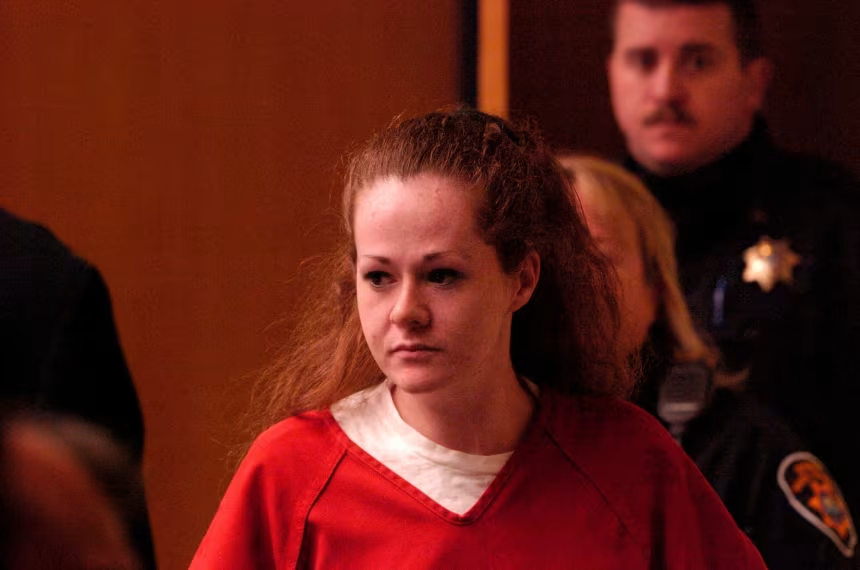
When Christa Pike tortured and killed her classmate Colleen Slemmer in 1995, support for the death penalty was near its peak in the United States.
More than three-quarters of Americans, 77%, were in favor of capital punishment, according to polling by Gallup at the time.
Things changed in the decades Pike spent on death row before attempts to execute her by lethal injection failed Wednesday night.
About half the country, 52%, support the death penalty in the most recent Gallup data from 2025, although it’s important to note that a handful of Southern states – led by Florida, Texas and Oklahoma – are responsible for the bulk of executions today.
In the years before Pike’s crime, the death penalty had been a major issue in US politics and support for it has been worn as a sort of badge by politicians.
In 1992, then Arkansas Gov. Bill Clinton left the presidential campaign trail to oversee the execution of Rickey Ray Rector, who was convicted in the 1981 killing of a police officer. Clinton’s presence in the state wasn’t required, but observers noted it fed into the candidate’s desire to appear tough on crime.
Clinton was proud not to grant clemency to Rector. “We should no longer feel guilty about protecting the innocent as Democrats,” he said from a debate stage in New Hampshire the day before his trip.
In the years before Pike’s crime, the death penalty had been a major issue in US politics and support for it has been worn as a sort of badge by politicians.
Bill Clinton, Gubernur Arkansas
Subsequent Supreme Court cases outlawing the execution of people with intellectual disabilities would likely have prevented that execution from happening today (Rector had brain damage from a gunshot wound). The court has also barred executions for non-homicide offenses and crimes committed by juveniles.
Test heading
Penulis di Sorotan Publik.
Tulis Komentar